




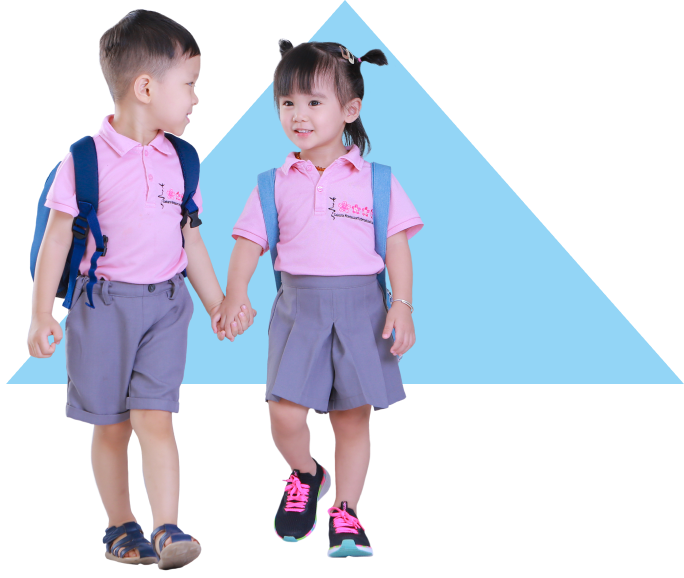

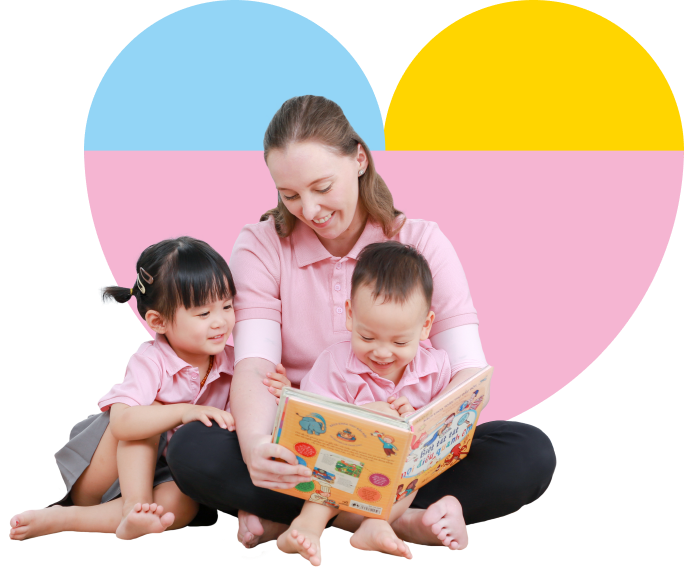
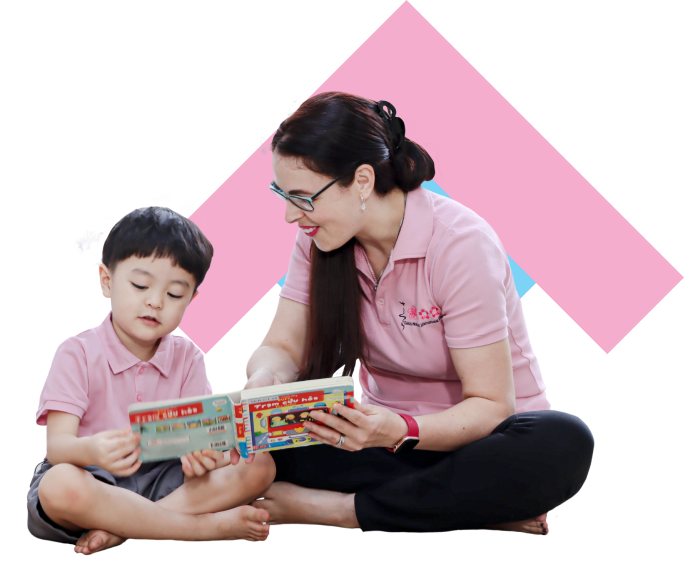
Unlike conventional classrooms, in a Montessori setting, you will be surprised to find mix-aged groups in the room. This is one of the typical features of this method.
Montessori classes are normally for children of 0-3 and 3-6. Why the multi-age grouping? What benefits will it bring to young children?
According to the study by Maria Montessori, children go through two stages during their first six years of life, which are 0-3 and 3-6. In the first stage from 0-3, children absorb unconsciously from the surrounding environment. As in the second stage of the conscious absorbent mind, the young brain experiences tremendous changes, senses develop strongly, and motor skills are being refined.

The mix-aged grouping at Sakura Montessori is hence to bring out positive experiences to children and maximize their learning to satisfy their developmental needs in each stage.
Experience multi roles in a scaled-down society
From the book “The Child, Society and the World” by Maria Montessori, we can understand that multi-age classroom is fundamental, as it greatly affects the cultural development of the child. This is obtained through his relationships. You can’t imagine how much a younger child can learn from an older one, and how patiently an older child can be with the difficulty of the younger ones.

According to that, a Montessori classroom is designed to resemble a home setting where children are given chances to learn and reach their milestones in two ways. Firstly, younger children are encouraged to long for the achievements of older ones. Secondly, older ones learn to treat younger ones with care and respect, allowing them to reinforce their understanding and knowledge by guiding young ones.

In this way, children can master skills of independence, discipline, flexible cooperation, grace, and courtesy; know how to share and care for others, and develop characteristics of a talented leader and assistant.
A rich environment to help children obtain knowledge and practice skills
The multi-age classroom in Montessori also gives young children a learning environment rich in experiences, allowing them to obtain knowledge and skills during their first six years of life.

It’s a common thing for all children to share the same curriculum. However, in a Montessori classroom, children will have their own learning pathway based on their interests, ability, and needs. Lesson plans for each child will be designed and adjusted upon observations and assessment to support them timely. And so, each child will develop at their own pace, satisfy their developmental needs to fulfill their potential.
Additionally, in this model of class, children of various ages can also interact, learn from, and support each other in a variety of learning areas such as:
– 0-3: Practical Life, Art, Sensorial, Language, Motor
– 3-6: Practical Life, Sensorial, Math, Language, Culture (Science, History, Geography), Art.
During this process, children will learn about teamwork to establish good relationships with others in the room. At the same time, children will learn how to respect the individuality and uniqueness of each member of society.

It can be seen that, in a mix-aged Montessori classroom, each child is facilitated to develop based on their own pace in terms of both academic knowledge and skills. This is the solid foundation for them to adapt to any learning environment and get ready for any challenges for success in later life.

- Giáo viên Montessori Quốc tế được chứng nhận bởi Hiệp hội Phát triển Montessori Quốc tế (IAPM).
- Tốt nghiệp Đại học Sư phạm Hà Nội
- 13 năm kinh nghiệm làm việc với trẻ nhỏ
Vừa tốt nghiệp đại học, cô Lã Thị Phương Thảo đã bén duyên với Sakura Montessori và gắn bó đến nay đã được 13 năm. Trong một thập kỷ làm việc với các bạn nhỏ tại Sakura Montessori, cô Phương Thảo luôn theo đuổi phương châm giáo dục cá nhân hóa dựa vào thiên hướng phát triển, cá tính riêng của mỗi cá nhân trẻ cũng như phù hợp với từng giai đoạn phát triển của trẻ để đạt được hiệu quả cao nhất.


