



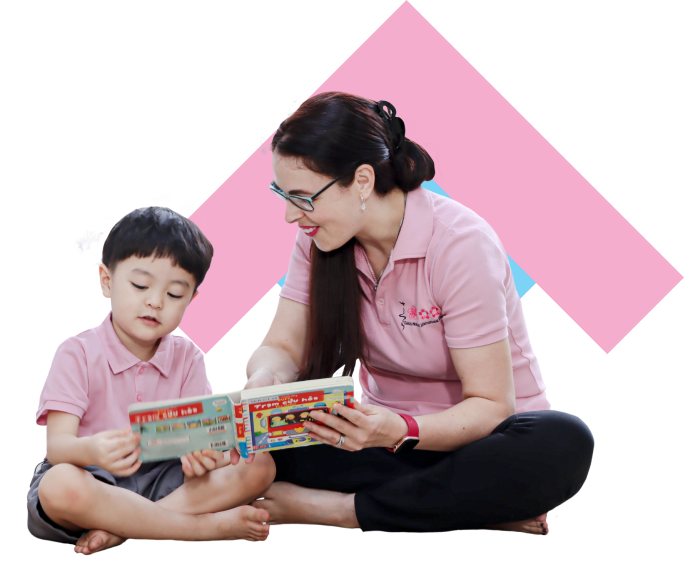
In the book “The Montessori Method” written by Maria Montessori, sensitive periods are defined as the critical stages for learning in young children. These also significantly affect their spiritual and personality development. Therefore, it’s critical for parents and teachers to understand the psychological characteristics of children and respect what nature has given to them, at the same time guiding them through these unique chances.
How many sensitive periods are there from birth to six years of age? What should teachers do to help children gain the most during these periods?
Sensitive periods and psychological characteristics of children
From birth to three years old, children develop a natural demand for order. Once criteria are set, the inborn demand for order in children will be activated. Apart from that, children often throw tantrums, that’s how they are reacting to the interrupted order.
From one year of age, children show a great interest in small objects, leading to the development of fine motor and pincer grasp. This is the foundation for writing and other important skills.
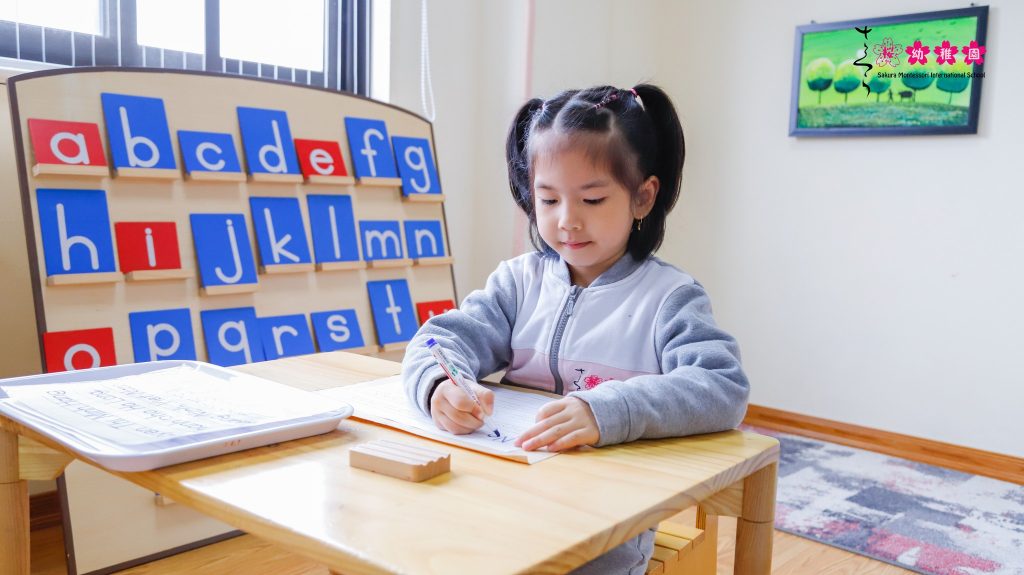
From 2.5 to 5 years old, children are attracted by activities such as tracing sandpaper letters and associating sounds to their corresponding letters. This natural interest results in the sensitive periods for reading and writing (from 4 to 5 years old).

The sensitivity for motor, emotional control, and Math concepts in children develops from birth, but it’s not until 4 to 6 years of life that it is strongly revealed. And this is a good time for cultivating an interest in Math in children.
At the age of 3, children experience the sensitive period for learning beat, pitch, and rhythm. Early exposure to music will boost the brain, resulting in knowledge, social, cognitive, and emotional development.
At Sakura Montessori, how do teachers support children during their sensitive periods?
A prepared environment meeting all learning and playing needs of children
At Sakura Montessori, the prepared environment ensures that the required space and materials are nicely arranged in advance, giving children the most useful and interesting experiences.
The room is always clean, airy, and full of natural light. Plants and art paintings are appropriately decorated, creating a room that is appealing and beautiful, helping children feel close to nature in harmony.
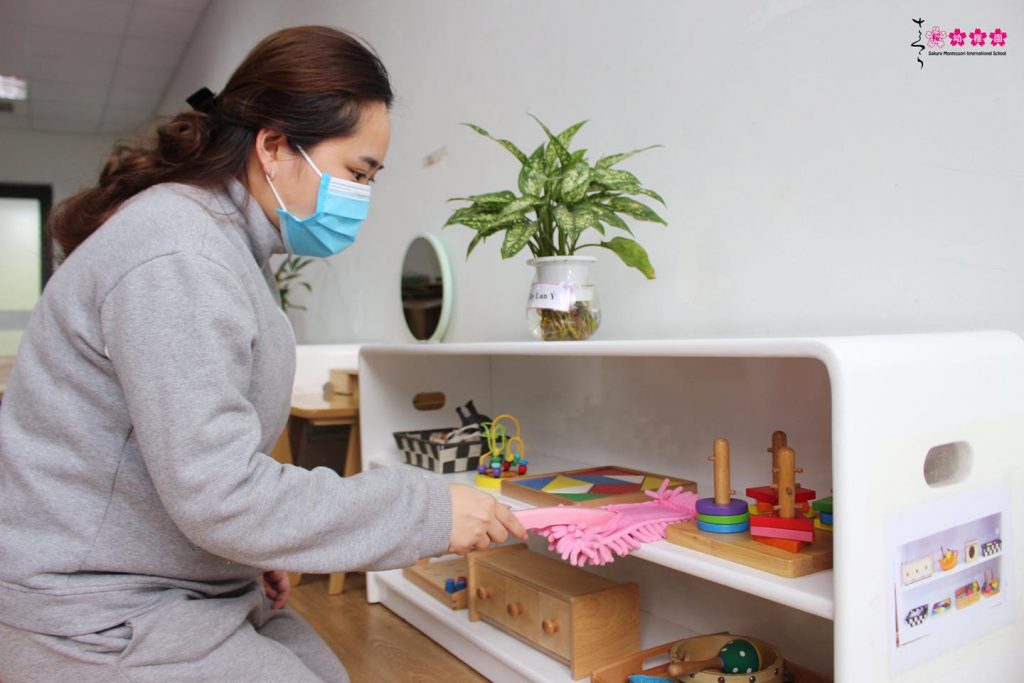
Various hands-on materials are made of natural materials such as wood, bamboo, and fabric, appropriate with children’s abilities, needs, and interests. All materials are nicely arranged, from simple to complex, from easy to difficult, and they are put on child-size shelves for easy access. This arrangement not only encourages children to explore and discover but also ensures safety for them. Especially, Montessori materials feature control of error, which allows children to experiment themselves and avoid the unnecessary intervention of teachers, which interrupts their attention.
A personalized learning pathway for each child
From their understanding of sensitive periods, along with daily observations and recording of children, teachers at Sakura Montessori will develop a personalized learning pathway for each child, meeting their interests, needs, and pace.
With the data collected, along with the discussion with teachers in charge of each learning area, the headteacher can adjust the lesson plan for each child on a weekly or monthly basis for timely support, hence satisfying their sensitive periods and helping them release their potential.
Effective communication with children
In terms of communication, Montessori teachers at Sakura Montessori always actively listen by focusing their attention on children, receiving, processing then responding to their questions or thoughts.

Besides, teachers also use “I-statements” to express their thoughts and feelings when children make a mistake instead of scolding them, such as “I’m worried when you push your friend because you might hurt him”. In this way, children will easily be soothed, and they will eventually realize their mistakes and adjust their behaviors.
Closely work with parents to support children during their sensitive periods
Sakura Montessori features a variety of activities in connecting with parents for optimum growth and development in children during their sensitive periods. The school will send periodical reports to parents via school management software. Additionally, teachers will also discuss in person with parents in personal meetings, parent orientation meetings at the beginning of the year, or in interactive events: Cafe with the Principal, seminars, conferences, forum “Parenting as a job”, etc.
In this way, the family can accompany the school in realizing the potential of children and supporting them in their journey of exploring new things around them.
With all this information, we hope that parents will now have a better understanding of sensitive periods in children and how to support Montessori teachers in educating their children during their first six years.

- Giáo viên Montessori Quốc tế được chứng nhận bởi Hiệp hội Phát triển Montessori Quốc tế (IAPM).
- Tốt nghiệp Đại học Sư phạm Hà Nội
- 13 năm kinh nghiệm làm việc với trẻ nhỏ
Vừa tốt nghiệp đại học, cô Lã Thị Phương Thảo đã bén duyên với Sakura Montessori và gắn bó đến nay đã được 13 năm. Trong một thập kỷ làm việc với các bạn nhỏ tại Sakura Montessori, cô Phương Thảo luôn theo đuổi phương châm giáo dục cá nhân hóa dựa vào thiên hướng phát triển, cá tính riêng của mỗi cá nhân trẻ cũng như phù hợp với từng giai đoạn phát triển của trẻ để đạt được hiệu quả cao nhất.


